
Designing Digital Spaces That Reflect the Caliber of Your Work
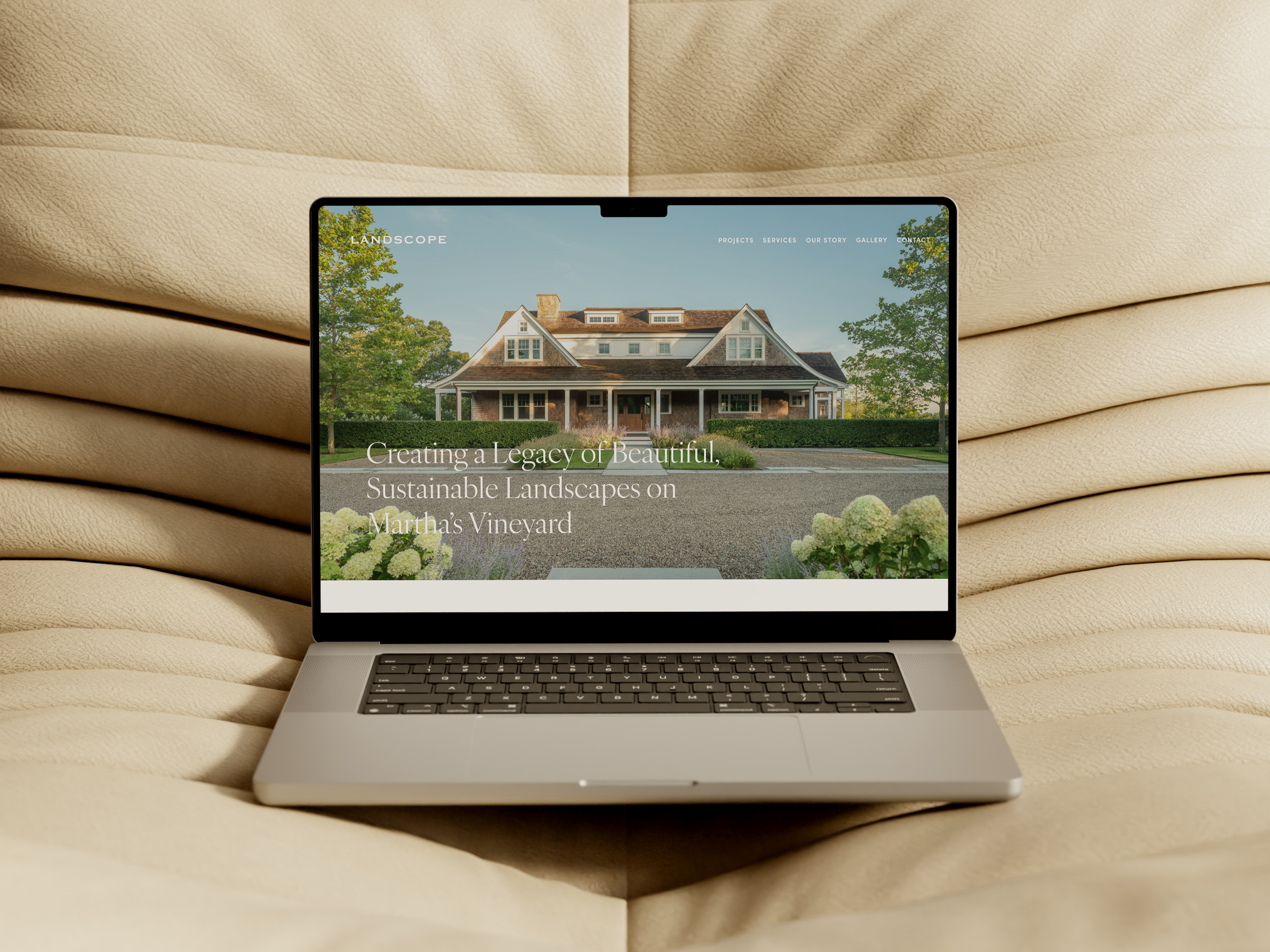
When it comes time to share your website with a potential client or customer, does something in you… hesitate?
Many creative-driven business owners have come to me with this exact feeling, and I totally get it…you’ve spent years building your business and honing your craft. Your work feels strong and deeply considered. Your clients experience it firsthand and respond with trust and appreciation. Referrals come easily to you, the conversations flow, and there’s no question about the quality of what you’re creating.
And then someone asks for your website.
It isn’t wrong, exactly. But it doesn’t quite carry the same confidence or care people feel when they experience your work in real life. It feels quieter. Flatter. More generic than the craft behind it. You start to sense a gap between the depth of your work and the digital space meant to represent it.
If that sounds familiar, trust me…you’re not alone.
As a founder who has spent years building brands and websites for businesses rooted in craftsmanship and who understands how personal this work can be, I often see this moment. It tends to show up not at the beginning, but after your business has already matured. When word of mouth is strong, trust is established, and your work has evolved faster than the digital foundation supporting it.
And I don’t want this post to make you feel behind. This isn’t about keeping up or doing more. It’s about alignment. About your digital experience, finally reflecting the intention, confidence, and care that already exist in your work.
When Your Work Is Exceptional (But Your Website Isn’t)
For many established businesses, your work is dimensional and rooted in years of experience. It reflects refined taste, thoughtful process, and a clear point of view. In many cases, you’re already operating at (or nearing) the top of your field.
However, your website tells a different story.
It may feel dated or overly minimal. Polished, but impersonal. Functional, but disconnected from the caliber of craft you deliver. Instead of feeling like an extension of your work, it feels more like an obligation, something required rather than considered.
This is where many founders begin searching for a website that reflects their work, not just one that exists online.
And that search is rarely about trends or features. It’s about alignment.
Why Your Craft Is Difficult to Translate Digitally
Craft lives in nuance. It shows up in pacing, sequencing, and decision-making. These are the details clients may not consciously name, but immediately feel. It’s present in moments like:
A space unfolding as you move through it.
The rhythm of a landscape or installation over time.
The care taken to understand a person, a place, or a vision.
The thoughtful timing and finish that uplevel the final result.
These qualities are experiential by nature, and in digital contexts, that nuance is easy to lose.
Information gets buried or poorly prioritized. Structure is either overwhelming or overly simplified. Visuals may look “nice,” but they don’t communicate confidence, depth, or authority. Even with strong photography, neither the words nor the visuals support or enhance the story.
As a result, many websites for creative professionals fall into one of two traps:
Too much information that’s poorly structured, and the work gets lost.
Too little substance with a generic design, and the work feels smaller or interchangeable.
Templates can be helpful early on, but they’re rarely built to evolve with a growing, high-caliber business. The most effective high-end service business websites aren’t just attractive; they’re intentionally structured and custom-built to support the complexity behind the scenes.
This is why so many talented businesses feel misrepresented online without being able to pinpoint exactly why.
Matching Your Digital Presence to Your Caliber of Work
A digital presence that truly matches your work isn’t about replication. It’s not a one-to-one translation of a physical or experiential outcome. It’s not about adding more pages or visuals or over-designing for the sake of refinement.
Instead, it’s about interpretation.
A matching digital presence understands what matters most (and leads with it). That shows up through:
Hierarchy: Knowing what deserves focus so the work isn’t competing with itself.
Restraint: Letting the strongest elements breathe instead of filling every inch.
Rhythm: Creating a flow that mirrors how someone would experience the work in real life.
Narrative: Guiding visitors through the intention and thinking behind the work.
User experience and systems: Designing the site to feel intuitive, supportive, and considered as someone moves through it.
Intentional structure: Making sure every section exists for a reason and reinforces trust and quality.
This is the foundation of experiential website design…not spectacle, but clarity. At its best, the website doesn’t call attention to itself. It sets the context so the work can speak clearly.
“The website isn’t the star. The work is.
How A Strong Website Strategy Can Support Your Craft
For founders with businesses rooted in craftsmanship, strategy can sound abstract or even restrictive at first. In practice, a well-considered website strategy is what allows your work to land with clarity and care. When a portfolio-driven website is thoughtfully structured, it:
Makes the work easier to understand and appreciate.
Guides visitors without forcing them.
Removes friction instead of adding explanation.
Sets expectations before a conversation ever happens.
This is where clarity becomes supportive rather than limiting. Visitors intuitively understand the level, taste, and care involved without being told. Complex work feels calm and considered. Nothing distracts from the quality of what’s being shown.
A well-considered website strategy for creative businesses mirrors the work itself: intentional, refined, and confident. When a website doesn’t do this work up front, even the strongest craft can feel harder to access or fully appreciate.

How Your Website Sets Expectations Before You Ever Speak
One of the most overlooked roles of a website is expectation-setting.
Long before an inquiry is sent or a conversation begins, a website that reflects your work is already communicating what it’s like to work with you. Through pacing, hierarchy, and restraint, it signals standards, discernment, and care. It quietly answers questions clients may not yet know how to ask.
For many practice-led firms, this is where the gap between the work and the digital experience becomes most apparent. When a high-end service business website lacks clarity or structure, visitors are left to interpret the work on their own. Scope can feel unclear, the level of involvement required may be misunderstood, and what should feel intuitive instead requires explanation.
A well-considered website strategy for creative businesses does the opposite.
It creates alignment before contact.
It sets expectations without over-explaining.
It allows people to recognize whether the work is right for them (or respectfully opt out) before reaching out.
In this way, the website becomes an extension of leadership, shaping the relationship before it even begins. This isn’t about exclusivity. It’s about clarity as a form of care.
This is where experiential website design becomes especially important. Rather than relying on trends or surface-level polish, the focus shifts to how the site feels to move through. Sequence, rhythm, and hierarchy work together to support understanding and trust. The result isn’t a louder website; it’s one that feels confident, intentional, and aligned with the depth of the work itself.
Common Missteps for Creative-Led Brands Online
Most disconnects don’t come from lack of talent. They come from misalignment.
This often shows up when:
The website is treated primarily as a place to upload work, without giving that work context or narrative.
The portfolio evolves, but within a system that no longer supports differentiation.
Aesthetics are prioritized, but there is insufficient clarity on positioning, audience, or message.
Process is avoided because it feels too literal, rather than articulated with restraint.
The brand seeks to remain open to everyone, which unintentionally dilutes perceptions of leadership and discernment.
Here’s What to Do Instead
At Ethos, we believe websites should interpret the work…not just display it.
Strong copywriting matters because you have only moments to communicate depth, credibility, and intent. Structure matters because it makes a site feel natural to navigate. Visuals matter because they carry tone and emotion, but only when they’re sequenced with intention.
When branding, messaging, visuals, and structure all align, the experience feels honest rather than piecemeal.
This is where trends, shortcuts, and templates often fall short. They can look current, but they rarely reflect the nuance, values, or specificity of a real business.
This belief extends to how custom digital spaces are built. Effective custom website design for practice-led brands is never one-size-fits-all. It responds directly to their level of work, the audience they serve, and the business's long-term vision. When strategy leads, design choices feel deliberate rather than decorative, creating a digital presence that can evolve without losing its integrity.
Photography and video are also powerful tools within custom website design, but only when guided by strategy. Knowing what to elevate, when to lead with media, and how to frame it within a narrative is what transforms strong visuals into a cohesive digital experience.
Much like our clients who aim to create a feeling through their work, we’re doing the same in the digital space. A great website feels considered, intuitive, and deeply aligned with the people and the work behind it, whether it’s website design for interior designers, landscape firms, or any other creative-led brand.
What Changes When Your Digital Experience Aligns
When your digital presence truly supports your work, you’ll notice a shift. You’ll feel confident sharing your site without explanation or apology. Visitors recognize the level immediately. Inquiries arrive better aligned, with clearer expectations. Conversations feel easier because the groundwork has already been laid.
The brand, portfolio, and messaging feel coherent. Your work feels elevated, not because it’s being dressed up, but because it’s being presented with care.
“Instead of flattening the work, the website holds it.”
Digital as Legacy, Not Just Presence
A website is more than a marketing tool. It’s part of your brand’s record, a living archive of your work, your evolution, and your point of view. While websites do evolve, the strongest ones age well, much like good design, good art, and good craft.
They reflect standards, taste, and skill rather than chasing trends. They become reference points rather than followers. They feel immediately recognizable and trustworthy to the people who matter most.
At its best, a strong website that reflects your work doesn’t just support your business today; it carries your work forward with integrity.
And if your current site no longer does that…if it no longer reflects the level, care, or intention behind what you create, it may be time to rethink how your digital presence is built, not just how it looks. We partner with creative-led brands to translate depth, quality, and intention into digital experiences that truly support the work itself.
View our work or learn more about our approach.
If this resonates, I share more of this thinking in our newsletter—exploring brand strategy, cultural fluency, and what it takes to build a digital presence that actually reflects the caliber of the work.
